At the urgent request of the Indonesian government, the disaster-response team led by Professor Lixin Wu of Central South University, Academician of the International Eurasian Academy of Sciences, conducted rapid flood monitoring and assessment across Indonesia using satellite data from November 26 to December 1, 2025. The assessment was carried out using the Disaster Response System for the Belt and Road (DRS4BR) system and its Knowledge-Driven Flood Intelligent Monitoring (KDFIM) module, enabling flood aera detection and impact analysis rapidly.
The monitoring incorporated multi-source satellite data, including Sentinel-1/2, Landsat-8/9 and GF-3, combined with OpenStreetMap (OSM) building and road datasets as well as ESA WorldCover (ESA_WC). The above data sources were used to make a comprehensive evaluation of flood impacts on infrastructure, residential buildings, and agricultural land in Indonesia. The team produced the disaster maps in response to the request of BRIN Indonesia for emergency satellite-based support.
The maps indicate that the areas most severely affected by the flooding were located mainly along the northern coastal region of Indonesia. Within the mapped flood extent, more than 1,430 km of roads were affected (Fig.1), over 1,290 km² of cropland was inundated (Fig.2), and more than 6,750 buildings were impacted (Fig.3). The figures highlight representative disaster conditions in sub-regions labeled A through E, which show localized but significant disaster situation, including road disruptions, widespread cropland submergence, and extensive inundation of residential buildings.
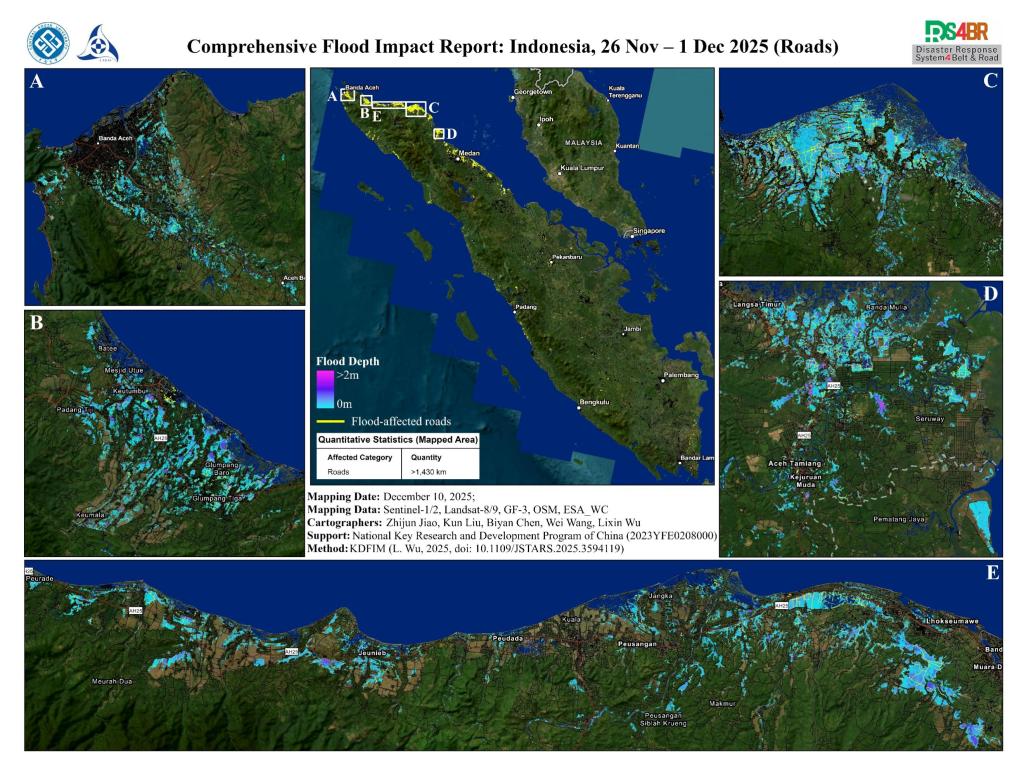
Fig. 1 Flood Impacts on Roads in Indonesia, 26 Nov – 1 Dec 2025

Fig. 2 Flood Impacts on Croplands in Indonesia, 26 Nov – 1 Dec 2025

Fig. 3 Flood Impacts on Buildings in Indonesia, 26 Nov – 1 Dec 2025
